 Image 1 sur 1
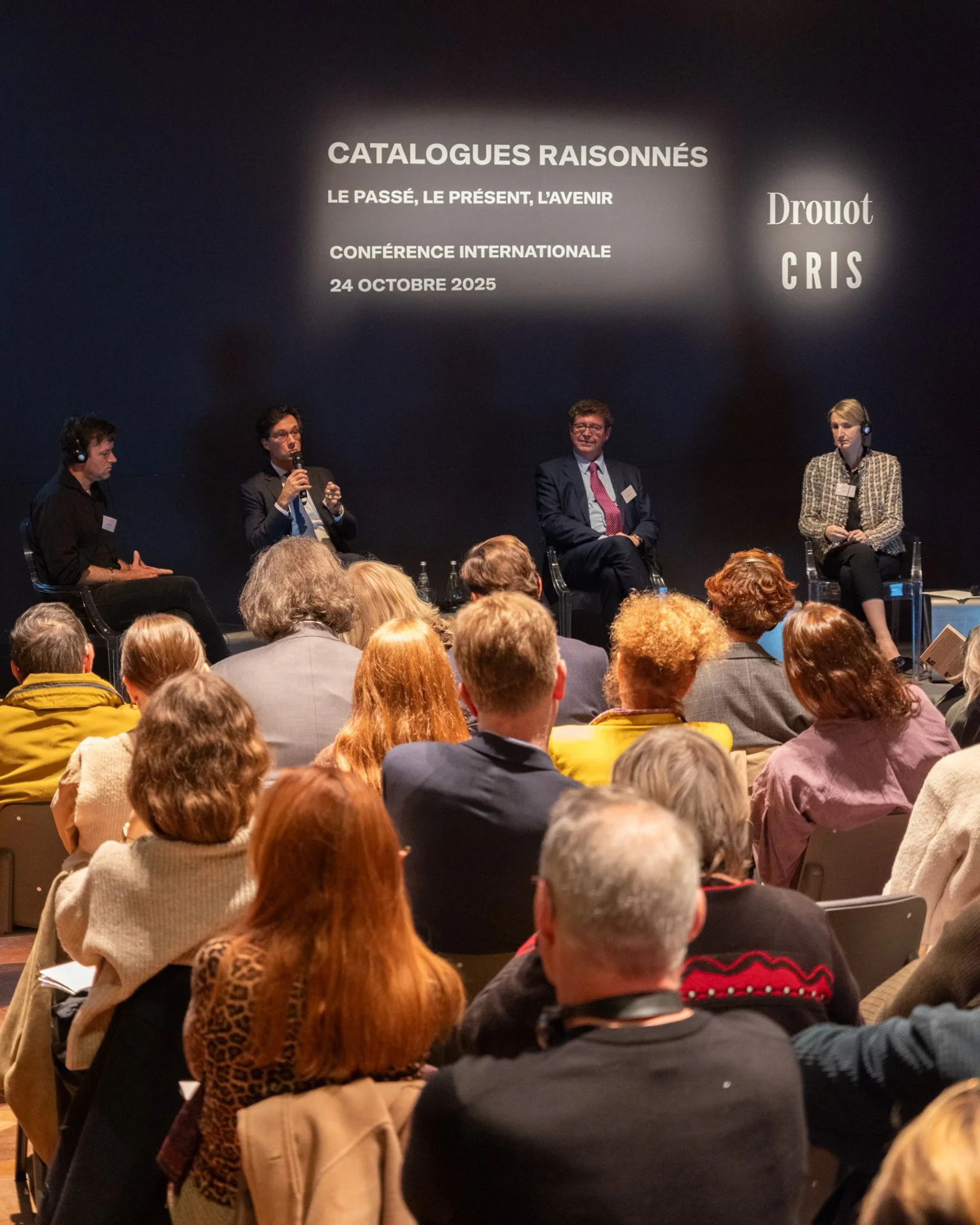
The inaugural conference of the Catalogue Raisonné International Society (CRIS), held at Hôtel Drouot during Paris Art Week, convened an international group of scholars, legal experts, and art market professionals to examine the evolving role of catalogues raisonnés. Moderated by Le Monde journalist Harry Bellet and CRIS President Ekaterina Bembel, discussions framed these publications as critical tools at the intersection of scholarship, authentication, and the global art market.
Discussions highlighted the field’s shift toward more data-driven, object-based research, with increasing emphasis on accessibility and digitization. As more catalogues move online, speakers noted both the expanded accessibility of digital formats and ongoing questions around publishing models and long-term sustainability.
Panels also emphasized the importance of diligent research and abundant public-facing information to accomplishing a successful catalogue raisonné. As committees and catalogue authors heavily impact the attribution, valuation, and market confidence surrounding their respective artists, collaboration, a methodological approach to modern technological tools, and an awareness of legal consequences have reshaped producing and maintaining a catalogue raisonné in today’s arts ecosystem.
An informational, thoughtful and international consortium on the methods and best practices surrounding catalogues raisonnés today, the conference ended on a high note – participants will look forward to continuing their conversations at the second iteration, taking place in fall 2026.
The inaugural conference of the Catalogue Raisonné International Society (CRIS), held at Hôtel Drouot during Paris Art Week, convened an international group of scholars, legal experts, and art market professionals to examine the evolving role of catalogues raisonnés. Moderated by Le Monde journalist Harry Bellet and CRIS President Ekaterina Bembel, discussions framed these publications as critical tools at the intersection of scholarship, authentication, and the global art market.
Discussions highlighted the field’s shift toward more data-driven, object-based research, with increasing emphasis on accessibility and digitization. As more catalogues move online, speakers noted both the expanded accessibility of digital formats and ongoing questions around publishing models and long-term sustainability.
Panels also emphasized the importance of diligent research and abundant public-facing information to accomplishing a successful catalogue raisonné. As committees and catalogue authors heavily impact the attribution, valuation, and market confidence surrounding their respective artists, collaboration, a methodological approach to modern technological tools, and an awareness of legal consequences have reshaped producing and maintaining a catalogue raisonné in today’s arts ecosystem.
An informational, thoughtful and international consortium on the methods and best practices surrounding catalogues raisonnés today, the conference ended on a high note – participants will look forward to continuing their conversations at the second iteration, taking place in fall 2026.